It constantly blows our minds when we think of how much our taste has evolved and how quickly we became desensitized to the culture shock of going from western to eastern TV and music. And there’s no better reminder than when we try to show a newbie some content and they’re like WOAH. This is weird.
And we’re like… ::confused puppy ears:: is it?
And we know the answer: it really is.
Since we’re now consuming Korean content almost exclusively – be it music related, variety shows, comedy skits, KDramas, or what have you – we’ve *almost* forgotten how we felt when we first started seeing glimpses of the differences in how eastern audiences, and specifically South Koreans, consume entertainment.
But we actually haven’t forgotten, and that’s what this whole episode is about. We both sat with our thoughts and reminisced about those first few months of the Korean content learning curve, all the things that threw us off then but now we’re fully acclimated to, and we shared them one by one with you all.
Things Korean Entertainment Has Normalized For Us as Western Watchers
Some of these happen across the board, others are specific to either music or TV:
– Use of graphics on the screen to enhance vibe of the moment
– Description/narration of what we’re seeing in the captions
– Watching the same moment multiple times from multiple vantage points
– Romanticizing or joking along with “couple” stuff, especially within same-sex groups (which is even more surprising with how homophobic and patriarchal the South Korean demographic is typically set up)
– Base level humor: cross-dressing, gender-based challenges, pranks/missions
– Aegyo
– Skinship
And these are K-Pop-specific:
- Differentiation between idol and artists
- Same choreo every time
- Structured ments @ concerts
- Albums: physical?!
- Photocards (baseball cards)
- Multiple versions
- Jewel cases
- Repackages
And in the world of KDramas/Webtoons:
- Hour long episodes, short single seasons
- Tropes –
- Band aid scenes – ML (male lead) to FL (female lead) putting on a band aid.
- Overdramatic hugs.
- Everyone constantly falling.
- Drunk scenes – there has to be ONE (and there’s gonna be throwing up probably).
- Piggyback rides – why do South Korean people romanticize piggyback rides?.
- Sexualization of the MLs but not FL.
- Food – SO. MUCH. FOOD.
- Wrist grabbing to stop someone from leaving.
- STALKERS – entirely too normalized and disturbing.
The Anglicization of Korean
Another funny thing is, we can sometimes fool ourselves into thinking we might understand some Korean, just because the entertainment industry in particular has adopted a lot of English words.
And it’s not just that they adopted the English word into their lexicon, but the way they spell it in Hangul always blows our minds AND even better, sometimes they use the word in a slightly different way than we do. For example:
- Schedule (1 activity)
- Quiz (1 question)
- Menu (a combo instead of the page/booklet where plate options are listed)
- Comeback
- Album, single, title
- Stage (the physical thing vs. “we prepared this stage” meaning, the number)
- Visual members as a role (the woke west would NEVER)
- TMI (while for us it’s oversharing, for them it’s sharing the most mundane and uneventful thing)
The K-Popification of English
Of course, none of these streets go one-way. There are plenty of Korean words/expressions we and fellow K-Poppies/K-Drama watchers around us have adopted and can’t use publicly without causing a few furrowed brows of confusion… like:
- Aigoo
- fighting
- Aish
- Wuah
- ::sound effect:: kghhhh (many meanings/uses)
- Chingu
- Daebak
- Jinjja
- Hajima
- Hyung/unnie/nuna/oppa/sunbaenim
And then, there’s the jargon
Spend a week on stan twitter, and you’ll find at least one daily reference to:
- “In tiny”/smol
- M00ts
- OT#
- PC (photocard)
- Cupsleeve
- All-kill
- Music shows (remember when MTV was about music here? What a concept)
- Daesang (awards)
- Saesang (bad fans, stalkers, disrespectful stans)
- Antis/solos
- Ult
- Multis
- Point/highlight dance
- OST
- Selcas
- Fancams
It’s all fun and games (especially drinking games)
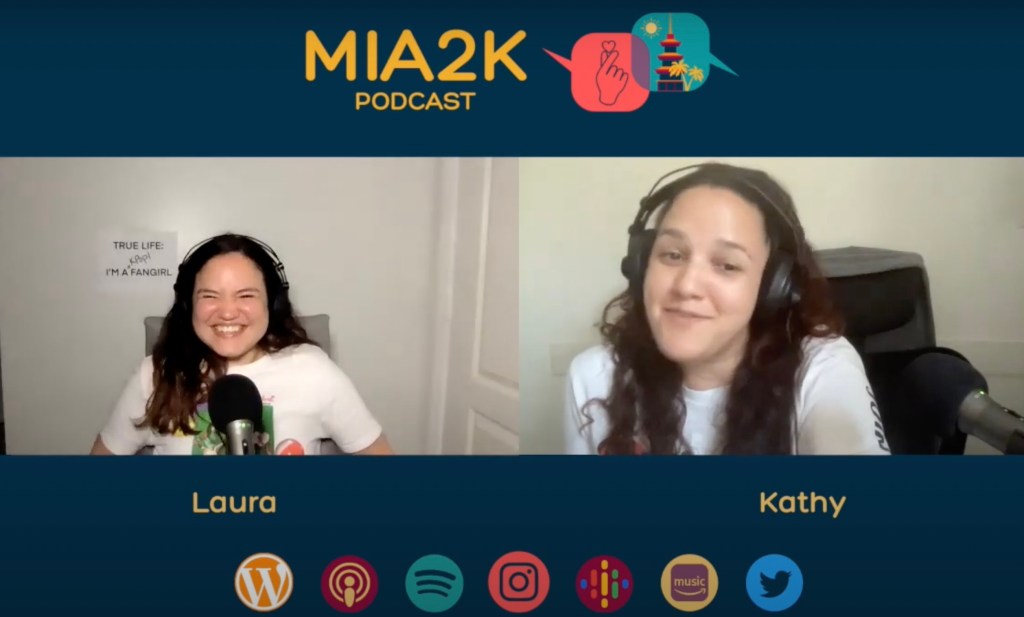
We closed the episode with a fun drinking game that could also be called “Kathy and Laura exposing themselves for 10 minutes straight,” which is much better to watch for yourself than have us tell you about it here.
 MIA2K: A K-Pop Podcast
Leave a comment