
You can find part 2 of this post here.
Are you planning a trip to South Korea? Feeling a little bit overwhelmed with the amount of information out there?
We got you covered!
We recently came back from our first trip to South Korea and we want to share all the tips and tricks we learned along the way. We gather 10 important things to know to ensure your planning process and your trip go as smoothly as possible, and this blog (and the corresponding podcast episode) have the first five!
If you’re checking out our blog because you listened to our latest podcast episode, welcome and thank you so much for listening! We appreciate you! If Google brought you here and you like all things K-Pop with a little bit of K-Drama shenanigans, please consider checking out our podcast, MIA2K Podcast.
Before we begin, we want to first share a little bit about our experience. As you all know, South Korea has become quite a hot tourist spot in the last couple of years due to the increasing popularity of K-Pop and K-Dramas around the world. Our interest in South Korea started right at the beginning of 2020 as we fell down the rabbit hole of Webtoons, K-Dramas and Korean music. Ever since then, we’ve been planning a trip and daydreaming of when we could finally visit. Around August of this year (2022), we finally decided to go for it and we couldn’t be happier!
We had an amazing time traveling the country and getting to know it on a different level than what we had seen on our screens. Taking in the landscapes in person, tasting the food, and being able to fully submerge ourselves in so many elements of the South Korean lifestyle (as tourists of course) was a life-changing experience for both of us.
So much so, that we want to encourage you to take the plunge and experience South Korea for yourself! If you’re intimidated by the idea of traveling to South Korea, don’t be. Here we have the first five things you MUST know to make your travel experience an amazing one!
1. When is the best time to travel to South Korea?
Hopefully, we’ve convinced you to go for it and go on your own adventure in South Korea. Now the fun really begins! We understand not everyone enjoys planning trips and figuring it all out but we are here for you to help you with this daunting task. So first things first, when should you go to South Korea?
Based on our research, the best times to go are in Spring and Fall. We can only personally talk about visiting in Fall as that’s the time of our trip, and it was the best decision ever! There were two main reasons behind our decision to travel in the fall:
- The weather
- Cost of travel
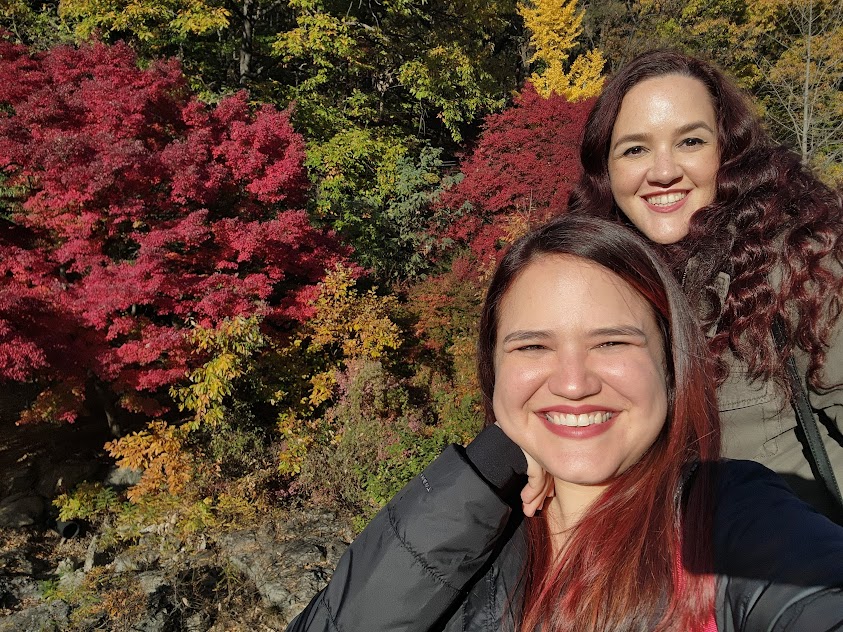
We are both based in sunny South Florida and it is HOT here almost year round, so we wanted something a little different. We also wanted to experience weather that would make sightseeing enjoyable and not have us trekking from landmark to landmark in sweltering heat. Fall provided us with fabulous temperatures (from lows in the 40s to highs in the 60s), affordable accommodations, off-season travel, and fall foliage (THE HIGHLIGHT!).
If you want to learn about traveling in other months, click here or here.
How many days should I plan to stay in South Korea?
Now, that you’ve chosen the correct season for your trip to South Korea (*cough* Fall *cough*), you have to decide on the trip duration. To make the most informed decision, some things to consider are:
- What do you want to see?
- How much vacation time do you have available (especially if you work a 9-5 like us)?
- How much time will you spend at airports or on planes?
With that being said, we suggest going for *AT LEAST* two full weeks (14 days).
As we mentioned, we both live in South Florida which meant getting to and from South Korea was going to take a LONG time. We wanted to make sure we had enough time to make the long plane ride worth it. Overall, we spent about 60 hours traveling from city to city (this includes our trip to and from South Korea), which is about 2.5 days out of the total 14 days.
Aside from travel time, 14 days allowed us to explore four cities comfortably, and accounted for some mild downtime between all the exploring. We had a couple of hiccups throughout the trip and we were able to get through them without feeling like we weren’t going to get to do things we wanted to do or had planned. Our rough itinerary was South Florida to Busan (with a day trip to Daegu), followed by Jeju Island, and ending in Seoul. We saw many of the main sights as well as some more niche ones.
2. What do I need to enter South Korea?
South Korea has different visa requirements depending where you are from. We are both United States citizens, which meant we didn’t need a visa to enter South Korea since our stay was for less than 90 days and we were going for tourism purposes only. We also didn’t need a negative COVID-19 test to enter. What we did need, as of November 2, 2022, was:
- K-ETA – an electronic travel authorization that visa-free foreign visitors need to get before boarding their flight to South Korea. The cost is 10,000 KRW or about $8 USD at the current exchange rate. Note that this process can take more than 72 hours (if there are a lot of applications, special circumstances, etc) so apply accordingly. Click here for a direct link to apply.
- COVID-19 Questionnaire (Q-Code) – a health questionnaire required to be completed before entering South Korea. You can fill it out prior to leaving (through this website) or when you land. Applying for a Q-code is free of charge. We would suggest that you do this prior to leaving as it expedites the arrival process.
If you want more information on what nationalities require a visa to enter South Korea, click here.
Please note that having an approved K-ETA and a Q-Code doesn’t guarantee entry to South Korea. The final determination is made by the immigration and quarantine control official during your entry inspection.
3. How do I get to South Korea?
For most people, the most expensive part of traveling to South Korea is the cost of airfare. The cost will depend on the airline, upgrades, and how far away you are from South Korea.
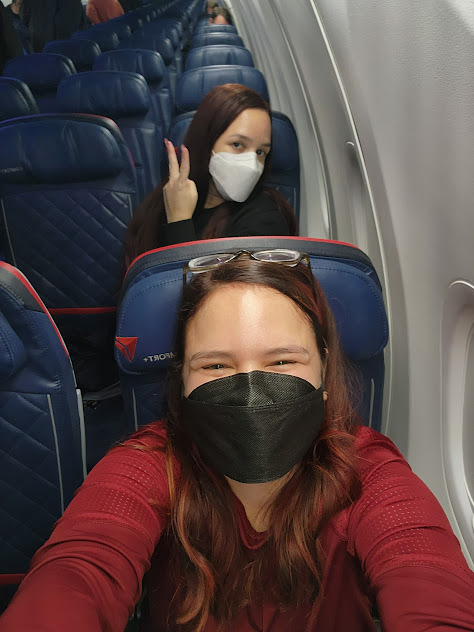
This was by far the most expensive part of our trip. We can’t speak for other airlines but for us, based on flight schedule and cost, Delta made the most sense. When we first started talking about this trip, we both agreed that we wanted to upgrade from Basic Economy. This is because we have done quite a bit of traveling and we have learned to know what’s important to us. We chose to fly Comfort+. For us, this meant ample overhead space as there is designated space only for Comfort+ passengers and a tiny bit more leg space. We really appreciated having more overhead space than normal as we were able to not only store our carry-ons but also our backpacks and bulky coats.
Some tips that have worked for us before have been:
- Buying tickets on Tuesdays
- Buying tickets in incognito mode (website cookies store your search info and ticket prices are affected by this)
- Using credit card points to buy airfare (one of us diligently saved all of her credit card points for years for a special trip and was able to use them on this trip, so she paid $0 out of pocket on the plane ticket!)
Finally, we learned the hard way that the name listed on any ticket or voucher MUST match your passport 100%. This means all your names and your last names must be included. In the US, sometimes, we get away with buying tickets without including your middle name, for example. This is NOT the case in South Korea. Learn from our mistakes! Match your form-fill name EXACTLY to your passport. This may mean not including spaces between your names, which is ok!
TIP: If you – like us – were born with four names total (first name, middle name, and two last names), here’s an example of how you’ll have to enter that information on a Korean-owned site.
Let’s say your name is Ana Clara Sanchez Lopez:

4. Where do I stay in South Korea?
When we were looking into where to stay in our different stops within South Korea, we kept the following things in mind:
- Location (relative to main attractions and public transportation)
- Amenities
- Group size (for us, party of 2! TIP: in Korea, they say “team” instead of party!)
- Safety
Since we wanted to maximize our time in South Korea and ensure we experienced the trip that we had imagined for so long, we scoured countless articles to make sure that the location we ended up choosing worked with what we wanted to see. In general, the areas we picked (aside from Jeju) felt very central and had ample public transportation options. We stayed in the following areas:
- Busan – Seomyeon
- Jeju Island – Seogwipo
- Seoul – Myeongdong
We will talk more in depth about our experiences staying in each of these areas in separate blogs.
One of the hottest topics within the travel community recently has been whether to stay in hotels or Airbnbs. We personally chose to stay in hotels due to the amenities they provide. For us, having attendants in the lobby, central air conditioning/heaters, and room service (food and cleaning) was important. Hotels also felt like the safer option for us. South Korea is a very safe country, but as it was our first time, staying in hotels made us (and our families) feel a little safer. Once we decided to stay in hotels, we also agreed that we wanted to make sure to book rooms with twin beds. Based on our previous experience, we know that rooms and beds in hotels outside of the United States tend to be a bit smaller than what we are used to here. We wanted to make sure that we could sleep comfortably without worrying about moving too much or feeling cramped.
TIP: make sure to book stays that allow for free cancellation! We had to change hotels in Seoul due to reasons beyond our control (maintenance during our stay that would inconvenience us) and it was easy peasy to do since our booking had free cancellation. We didn’t have to endure a possible uncomfortable experience and ended up liking the location of the new hotel better!

Bonus: Should I stay in a Hanok?
What exactly is a hanok? A hanok is a house built in the traditional Korean style. Some of these beautiful houses have been converted to bed and breakfasts, which allow guests to experience a unique stay. If you’re wondering whether it’s worth it, let us assure you –– it 100% is!
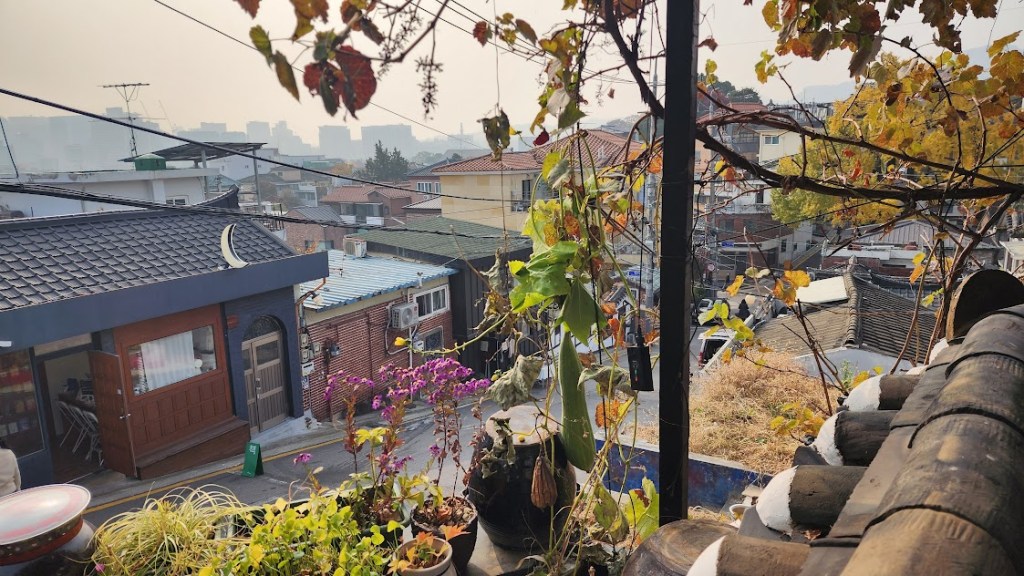
We stayed at a hanok for one night in Seoul and it was amazing. The neighborhood was gorgeous as it was located in Bukchon Hanok Village. We were able to experience heated floors, sleeping on a korean floor mattress, and a delicious korean breakfast.
5. How do I move around in South Korea?
- Transportation
There is ample public transportation in South Korea. It is also extremely affordable. Bus fares were 1,200 KRW or about USD $0.90 cents. Subway fares are about 1,300 KRW or about USD $1. If you make sure that your itinerary is planned based on areas, you won’t have to spend a lot of money each day on public transportation as most sightseeing is done by walking anyway!
Before you can get on that subway car or bus, you need a T-Money card. A T-Money card is a transportation card that can be used on buses and subways in several cities throughout South Korea. We used it in Seoul, Daegu, and Busan without an issue! The T-Money card costs 2,500 KRW or about $2. You can buy them at the airport or convenience stores. They can be recharged at subway stations and convenience stores (with cash only!). It can be used to pay for various other things and services like taxi charges and vending machines. Having the T- Money card made it super easy to get on the subway and buses as we didn’t have to count the fare every time we got on.
The subway and bus systems in Seoul and Busan (which is where we mainly visited during our trip) were extensive. They were also easy to navigate once we realized the couple of things that made it a bit different.
For instance: for the subway, our map applications (typically Naver) would tell us to get on a certain line heading in a specific direction. But instead of using the last station of the line as a directional reference, it would show the next stop in the subway’s route (which wasn’t the same information on the subway station signs, so sometimes it would take us a bit longer to figure out which side of the station to go to).
In the case of the buses, you must always be aware of where you are in relation to where you want to get off. Make sure you’re always looking at the map as the number of stops that the maps tell you aren’t always accurate. Don’t rely on how many stops the app tells you are part of your route, but rather follow your location closely on the map app to know how close you are to arriving. Finally, you must hit the red “STOP” button that is available along the wall, on the poles, or even above your head on buses to let the bus driver know that you want to get off, even if it looks like they are stopping at every stop along your route.
We also rode the KTX or Korea’s High Speed Train for a day trip from Busan to Daegu. The price for the tickets was very reasonable, and the train stations in Busan and Daegu were nice and clean.
The trains themselves were clean and comfortable (we rode economy). There was space for baggage and the train cars had Wi-Fi, as well as outlets to charge your phones. They also offered snacks for sale on-board. Make sure to buy your ticket prior to your travel date to guarantee there will be tickets available at the times you want to travel. Also, avoid Rail Ninja as they charge an exorbitant price for their service.
Are you wondering if renting a car is necessary? The answer is no –– in the major metropolitan cities. We were able to perfectly move around without the need for a car in Busan, Daegu, and Seoul.
Matter of fact, a car would have made everything much harder to do. However, there is a caveat: if you plan to add Jeju Island to your itinerary, then you DO need a car. If you can’t rent a car, we would recommend skipping Jeju Island.
In order to rent a car in South Korea, you need a valid license in your home country as well as an international driver’s permit (IDP). We got ours from AAA.
You can get an IDP in person or by mail. If you want to get yours from AAA as well, you can click here to find a location near you. If there aren’t any locations near you, you can get the IDP by mail, though this will take longer –– so plan accordingly. To get an IDP, you need:
- A completed form (which you can find here)
- $20 USD
- 2 original passport pictures
- A valid driver’s license.
*For the South Florida branches, you don’t need to make an appointment.
- Apps
So now you must be wondering, how do I find my way around? The best option is to use Naver Maps or Kakao Maps, as Google Maps isn’t very accurate in South Korea. Most of the time, it won’t even show you a route when you try to get directions on it.
We personally used Naver Maps almost exclusively during our trip, as we found it more user friendly. We sometimes tapped into Google Maps (for recommendations on restaurants, attractions) and then used Naver Maps to get there. The one difficulty of using Naver Maps is that it works best if the addresses are in Korean, even if your app is set to English. Google Maps didn’t always have the addresses of the places we wanted to visit in Korean, so that took a little time to figure out.
Sample Screenshot of Naver Maps (it was set to English here!)
The best thing we did was to do a little bit of planning before our trip and save places of interest in each of the cities we visited. This way, all we had to do was click on the Favorites tab in Naver Maps, select the place of interest, and then we had our directions to get there. To do this, you do need to create an account on Naver Maps. It really did save us a lot of time!

You can find part 2 of this post here.
We hope you’re finding all of this information useful! If you want to hear a bit more of our take on this, remember part one of our podcast episode with all of these tips is now live, and you can watch it on YouTube as well.

 MIA2K: A K-Pop Podcast
Leave a reply to South Korea Chronicles: Staying at a Hanok in Seoul – MIA2K: A K-Pop Podcast Cancel reply